
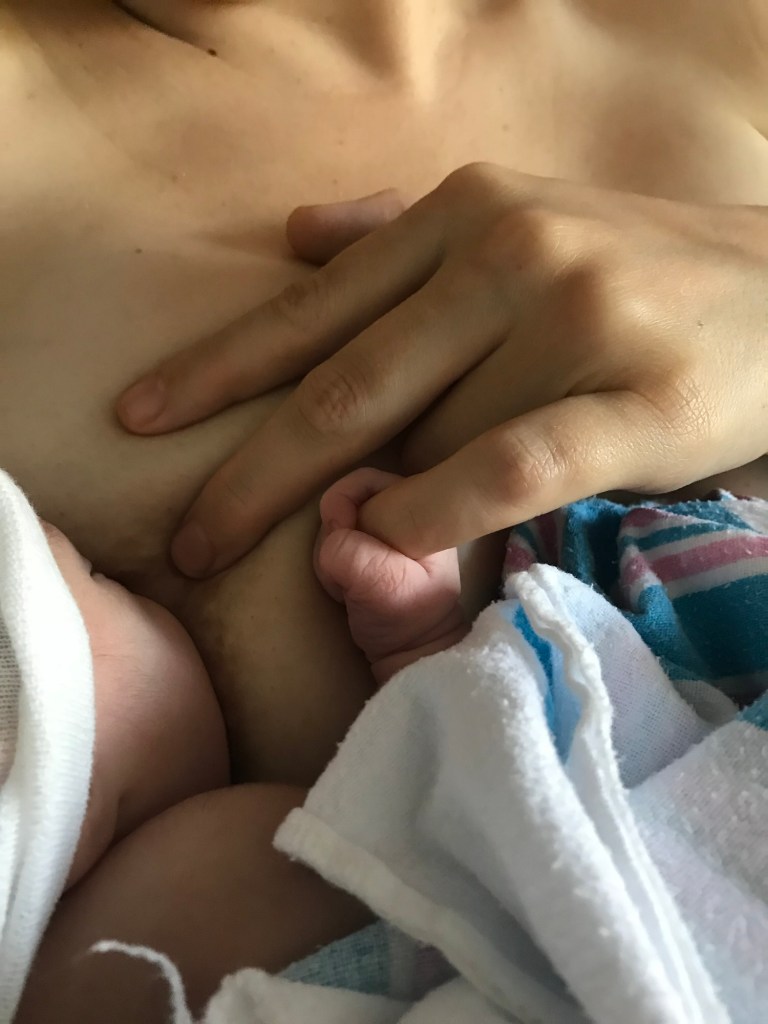
Local care matters!
Without your help, the BMH Birthing Center is at risk for closing, leaving Windham and Windsor Counties without a hospital with OB services, and forcing births out of Vermont. The economic, demographic and public health consequences of this decision would be irreversible.
The Facts
- Birthing Center Closure Would:
- Cause a cascade of job loss across BMH. The job losses created by a Birthing Center closure would not be contained to the Birthing Center alone. The integrated nature of care means approximately 50 lost jobs would ripple across multiple departments and service lines — among the highest-wage positions in Windham County.
- Nearly double out-of-state births overnight. Since Springfield Hospital closed its birth unit in 2019, 80% of Windsor County residents give birth out of state — 290 patients last year. If BMH follows suit, out-of-state births from our two counties would increase to more than 550 per year. Windham and Windsor counties would account for approximately 80% of all out-of-state births by Vermont residents — a disproportionate loss that would further undermine our region’s ability to attract and retain young families and high-paying
healthcare jobs. - Transfer Vermont tax dollars out of state. Without BMH, more than 10% of all Vermont births would leave the state from our region. The majority of healthcare costs go to salaries — losing those salaries would hurt
local economies and decrease Vermont’s tax base. Vermont tax dollars should not be funding New Hampshire’s hospitals and their associated tax base. - Make prenatal care harder to access. Obstetric patients need regular prenatal visits, ultrasounds, laboratory work, and fetal monitoring. At the end of pregnancy, patients should be seen once or twice a week based on risk factors. When patients are 45 to 60 minutes from a hospital, those appointments become burdens that working families frequently cannot sustain. The result is less care, or no care.
- Accelerate our demographic crisis. When communities lose birthing services, young families leave or choose not to come. Windham County is already the oldest county in the oldest state. Closing the Birthing Center would accelerate exactly the demographic decline we are working to reverse.
- Force our patients toward hospitals that may not have capacity to serve them. Conversations with neighboring hospitals must happen before any closure decision. BMH has taken patients from Cheshire Medical Center and Baystate Franklin on multiple occasions when those hospitals were on diversion. It seems unlikely that other local hospitals have the capacity to absorb all of our volume.
- Erode confidence in BMH as a whole — and could threaten the hospital itself. Birth centers are among the most visible and emotionally connected services a community hospital offers. Their loss signals institutional decline to patients, to physicians considering where to practice, and to employers deciding where to locate. That erosion of confidence puts the viability of the entire hospital at risk.
- Cause a 4% per capita income loss in the surrounding community. Research shows that rural hospital closures cause economic harm that extends far beyond the jobs lost directly — rippling through every business, household, and tax base in the region. Brattleboro cannot afford that contraction.
Patients speak to the need for BMH birth services:
“Brattleboro is 30 minutes from my home. The next closest birthing center an hour away. Both of my children took 45 minutes to go from nothing to fully dilated and pushing. If I didn’t have the option of BMH my children would have been born along the road. I hemorrhaged with one of them and one had a cord wrapped around her neck. I can’t imagine the outcome if I wasn’t with trained individuals.” — Kristina, Townshend, VT
“It was extremely important to me to give birth locally. In fact, I moved from central Vermont to southern Vermont in part so that I could receive prenatal care at BMH and give birth at the BMH Birthing Center. If I were not able to receive prenatal care at BMH or give birth there, I would seriously consider moving out of the area because of that.” — Elizabeth, Putney, VT. These are not outliers. They are the norm. The full compilation of patient testimonials is worth the board’s time.
2. BMH Provides Essential, Quality Care — Even as Our Patients Are Among the Most Vulnerable
- 2025 Primary C-section rate of 12.8% at BMH vs 22.8% nationally
- 2025 Overall C-section rate of 24.3% at BMH vs 32.3% nationally
- Most homebirth transfers in the State (higher than any other community hospital)
- 2x state average of patients with gestational diabetes, pregnancy-related hypertension, or opioid use disorder
- Vermont is the only state with an A grade in maternal health from the March of Dimes
- Maternity access is already critically thin. Nearly 1 in 3 Vermont pregnant people already travel farther than the American College of Obstetricians and Gynecologists (ACOG)’s 30-minute guideline — three times the national average. Increased travel time is a well-documented risk factor for maternal and infant complications.
- Collaboration with Dartmouth: BMH maintains an active partnership with Dartmouth Maternal Fetal Medicine and Neonatology for complex cases, including telehealth consultation and coordinated transport.
- Annual training and oversight: UVM provides in-person skills and drills training each year. The Vermont Child Health Improvement Program (VCHIP) conducts an annual outcome data review with each community hospital for quality oversight.
- Capability beyond our designation: BMH is designated low-risk but routinely cares for high-risk patients too unstable to transfer. BMH has safely delivered babies as early as 23 weeks gestation, coordinating in real time with Dartmouth NICU teams.
- Our midwives provide essential GYN care too. In addition to prenatal care, Midwives provide nearly 3,000 outpatient GYN visits annually. They offer essential GYN Wellness Visits, provide all methods of contraception, and consult on most general gynecologic conditions. Our PCPs will be unable to keep up with this need and our employed GYN physicians are already tapped out meeting our community’s need of complex GYN and surgical care.
Support of BMH’s birth services from the doctors who see us in action:
“We are consistently impressed with the top quality, evidence-based obstetric care that the team at Four Seasons OB/GYN provides.”
— Drs. Ilana Cass and Kata Himes, Chair and Vice Chair of OB/GYN, Dartmouth Hitchcock
“The folks who provide care to moms and babies at Brattleboro are the cream of the crop.”
— Dr. James Gray, Associate Chief of Neonatology, Dartmouth Health Children’s
- A National Crisis — and Why Vermont Must Resist It
- More than 130 rural labor and delivery units have closed or announced closure since 2020 — more than two per month. Fewer than half of U.S. rural hospitals still deliver babies.
- Birth centers have been loss leaders for decades. Hospitals historically absorbed the loss because births build patient loyalty and revenue from surgery, radiology, and specialty care covered the gap. That cross-subsidy model is collapsing as those revenue streams shrink.
- National reimbursement does not cover cost. Medicare covers 83% and Medicaid covers 58% of the true cost of care, leaving hospitals to rely on commercial insurance to make up the difference — a gap that is closing under rate reform pressure.
- Federal policy is making it worse. Medicaid cuts moving through Congress are projected to cause up to 45,000 Vermonters to lose coverage, directly increasing uninsured birth rates at hospitals like BMH. Proposed site-neutral payment policies would cut Medicare payments 12% for hospitals with 100 or fewer beds.
- Vermont is the only state in the nation to earn a perfect “A” on the March of Dimes maternal health report card. Closing BMH’s Birthing Center would put that distinction — and the outcomes behind it — at serious risk.
- Why BMH and Windham County Are Hit Hardest Financially
Financial Pressure Factor Data
Annual operating loss from birth center: $3.8 million
BMH collection rate per dollar billed for OB/GYN care: 42.8 cents
BMH birth patients on Medicaid (vs. 37% statewide): 44%
Windham County uninsured rate (vs. 3% statewide): 9%
Windham County residents on Medicare (vs. 19% nationally): 26%
Vermont fertility rate below national average: 23% lower
Windham County fertility rate among Vermont counties: Lowest
Birth volume decline at BMH since 2019 (vs. 10% statewide): −29%
Vermont Medicaid hospital rate increase in FY2025: 0%
- BMH collects only 42.8 cents per dollar billed for obstetric services — a reflection of the payer mix above and reimbursement rates set by policy, not by BMH.
- Vermont’s Act 68 caps what hospitals can charge commercial insurers — the one payer that historically reimbursed above cost. The cap was designed to rein in large systems charging commercial insurers 400% or more of Medicare rates. BMH was never doing that, yet the uniform cap reduces our commercial revenue nearly as severely, eliminating the margin that would otherwise cross-subsidize maternity care.
- The Green Mountain Care Board (GMCB) has reduced hospital revenues by nearly $100 million in the past year and is calling for $40 million more in cuts — designed for large systems but landing on small hospitals with no financial cushion.
- A Realistic Path to Sustainability
Recapture Windham County Births
- BMH has lost 25 more births per year than the county demographic decline predicts. These are recoverable.
- 89 Windham County residents gave birth out of state in 2024. Targeted marketing, branding investment, and a clear community message that BMH is stable and committed to its Birthing Center would recapture up to
50 births from Windham and Windsor Counties, conservatively. Patients are choosing other hospitals because they fear BMH will not be open when their due date arrives — not because of our quality.
Expand Into Windsor County - 290 Windsor County residents gave birth out of state in 2024 — 80% of all Windsor County births, a direct consequence of losing their delivery hospital in 2019. Much of Windsor County is an underserved population with no good local option.
- A hybrid prenatal care model in partnership with Children’s Integrated Services (CIS) would bring prenatal visits and education to patients in Springfield and other Windsor County communities, lowering the barrier to choosing BMH for delivery.
- A homebirth practice in Windsor County has expressed interest in formalizing a transfer relationship with BMH, expanding our safety net role and patient base.
- Improving transportation support — including direct rides for Windsor County patients traveling to BMH — would directly reduce one of the primary barriers to local care.
- Partner with Northstar to set up maternity and GYN care with their Federally Qualified Health Centers (FQHCs). These services reimburse at higher rates with the FQHC and would help capture more BMH deliveries from Windsor county.
- We plan to apply for The Rural Health Transformation funds to help fund the partnerships listed above.
Philanthropic Investment — an Untapped Opportunity - BMH has not had a concerted capital campaign in years. A dedicated development professional focused on major donors, grant dollars, and foundation giving could unlock significant philanthropic support.
- Birth centers are among the most emotionally resonant causes for donors. Families who delivered at BMH, community members who want to keep young families in Brattleboro, and foundations focused on maternal
and child health represent an engaged and largely untapped donor base. - A well-resourced development effort could offset operating losses in the near term and build an endowment that provides durable support for the service line.
State and Federal Policy Changes Required - Adopt Standby Capacity Payments. The current model pays hospitals only when a birth occurs, but the costs of 24/7 readiness are fixed regardless of volume. The Center for Healthcare Quality and Payment Reform proposes a two-part solution: (1) a monthly Standby Capacity Payment per insured woman of childbearing age in the service area, covering fixed costs; and (2) a smaller per-birth fee covering only variable costs, set at the same rate for vaginal and cesarean deliveries. This model decouples revenue from
birth volume and breaks the cycle in which falling births lead to closure. Vermont’s GMCB and legislature should be urged to adopt it. - Keep Vermont births in Vermont. GMCB and the Department of Vermont Health Access (DVHA) should adopt policies that incentivize Vermont Medicaid and commercially insured patients to deliver at Vermont hospitals. Vermont currently reimburses out-of-state deliveries; Massachusetts does not. Vermont should adopt a reciprocal policy — ending the perverse incentive that sends Vermont patients and Vermont tax dollars across state lines. This is a DVHA administrative decision, not a legislative one.
- GMCB must use its existing authority. Act 68 allows higher reference multipliers for small community hospitals. GMCB should apply this flexibility explicitly to protect rural maternity care from the revenue reduction pressure designed for large systems, and should shield rural OB service lines from the annual budget review incentive to cut unprofitable services.
- Create a statewide OB provider pool. Vermont hospitals are competing against each other for the same small pool of per-diem and locum obstetric providers, driving up rates for everyone. A state-administered or
hospital-association-managed provider pool would employ or contract a shared float of OB nurses, midwives, and physicians available to rotate across participating hospitals at standardized rates. This would eliminate inter-hospital bidding wars, reduce per-diem costs across the system, and provide more predictable coverage for small hospitals like BMH that cannot sustain a full employed roster on their own. GMCB’s budget oversight authority and Vermont’s existing all-payer framework make this more feasible
here than in most states. - Protect rural hospitals from federal cuts. Vermont’s congressional delegation should oppose Medicaid cuts and support the Rural Maternity Options for Medical Support Act, which would exclude labor and delivery beds from the Critical Access Hospital (CAH) 25-bed limit. One path to BMH’s long-term sustainability is achieving CAH designation, and we do not want labor and delivery to become a barrier to obtaining it.


 Save Birth at Brattleboro Memorial Hospital